

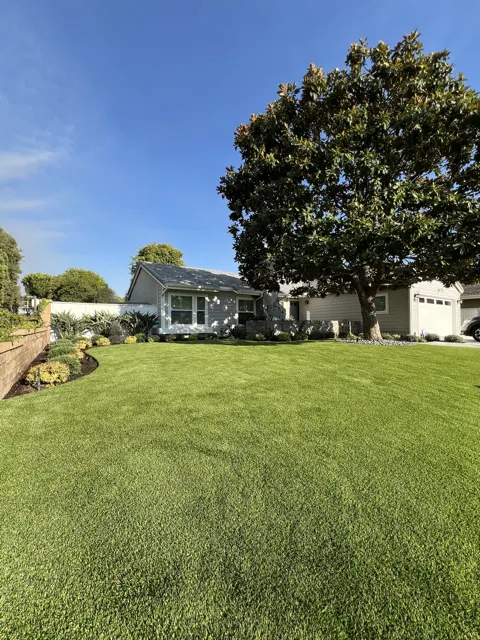
Artificial grass saves you the mowing, the fertilizer, and the brown patches. It doesn’t save you from dust, leaves, and whatever the dogs leave behind. In Southern California that matters more than in rainier places, because a yard can go months without rain, and nothing rinses the turf for you between spring and fall.
The good news is that the routine is short. Here is what to do at home, what to avoid, and when a yard needs more than a hose and a brush.
How often should you clean artificial grass?
It depends on how the yard gets used. A decorative front lawn may only need leaves cleared and a rinse when it looks dusty. A backyard with kids, pets, or a lot of foot traffic needs a quick rinse and brush more often, and pet areas need it most, especially in summer.
A useful test is to look and smell. If the fibers look gray with dust, if leaves are collecting along the edges, or if a pet area smells on a warm afternoon, it’s time. Waiting doesn’t save work. Dust and residue settle down into the infill, where they’re harder to reach.
How do you clean artificial grass at home?
- Clear debris. Use a leaf blower on a low setting, a plastic leaf rake, or a stiff broom. Leaves and twigs left on the surface hold moisture and break down into the turf.
- Rinse. A garden hose washes off dust and pollen and keeps fresh pet urine from drying on the fibers.
- Brush against the grain. A stiff brush with synthetic bristles lifts flattened fibers and spreads the infill back out evenly. Traffic paths from the back door to the gate need it most.
- Spot-treat. Rinse spills right away. On pet spots, use PE-51 enzyme spray and rinse it in.
- Pick up solid waste daily in pet areas, then rinse the spot.
That’s the whole routine.
What should you never use on artificial grass?
Metal rakes, sharp tools, and wire brushes can snag and tear the fibers or pull at the backing. Harsh solvents can stain or weaken the fibers. A pressure washer held close to the surface can blast infill out of the turf. Heat is the other enemy. A fire pit, a grill, a dropped cigarette, or sunlight reflected off a nearby window can melt the fibers in one spot.
If you’re not sure about a product, test it on a small spot out of sight first, or skip it. Water, a brush, and PE-51 enzyme spray for pet spots cover almost everything.
What does a professional deep clean do that a hose can’t?
A professional deep clean reaches below the surface. The crew cleans through the fibers, deodorizes down to the backing where pet residue collects, power-brooms flattened paths to stand the fibers back up, and works fresh infill in where it has thinned. It also finds drainage problems a homeowner can’t see from above.
That last part matters. Odor, puddling, matted paths, and thin infill can look alike from the patio, but each one has a different fix. On our cleaning and repair visits, the first job is working out which problem the yard actually has.
When should you call for a deep clean?
- The smell comes back within a day or two of a thorough rinse.
- Traffic paths stay flat even after you brush them.
- The infill has thinned, and you can see backing between the fibers.
- Water puddles or drains slowly after a rinse or a rain.
- Seams or edges have started to lift.
Sometimes the turf itself was the problem from the start. One Yelp reviewer called us after their daughter’s new turf in Banning flooded in the first rain:
“My daughter purchased a brand new home in Banning. She had Artificial grass installed in the backyard and was disappointed with the end results. With the first rain her backyard flooded and the person who installed her artificial grass said he didn’t do drains. I called Scotts Artificial Grass and they came out and raised the drains 4” to their proper level to accommodate the heavy rains and avoid flooding. They also pointed out and repaired a few errors the prior installer did, including adding the proper amount of nails required. They were fast, professional and cleaned up before they left.“
Victoria S., via Yelp
We clean and repair turf from any installer. If you have dogs, our pet turf page covers how odor control gets built in from the base up.
Is a deep clean worth it, or is it time to replace the turf?
Most tired-looking turf needs a deep clean and grooming, not replacement. Replacement makes sense when the fibers themselves are worn through, badly heat damaged, or the backing is failing. A diagnostic visit tells you which one you have before you spend money on either.
If your turf looks flat, smells, or drains slowly, the estimate form below takes about 30 seconds. The owner will follow up to set up a visit. You can also read more about our turf cleaning and repair service.